Thursday, February 27, 2020

Assignment 13A- Reading Reflection No. 1

Assignment 13A- Reading Reflection No. 1

Book: Coco Chanel by Lisa Chaney

1. What surprised you the most? What about the entrepreneur did you most admire? What about the entrepreneur did you least admire? Did the entrepreneur encounter adversity and failure? If so, what did they do about it?
"Coco Chanel" was a very interesting read that allowed me to learn the background behind a well-renowned fashion designer who influences artists today. Truthfully, learning everything about her childhood and transition into adulthood was surprising to learn about, especially due to all the hardships she endured growing up. Among that, I most admired her resilience to create new, revolutionary fashion, despite all of the setbacks in life that would've normally discouraged someone to keep going. As someone who also believes people's experiences (both good and bad) are what shapes a person into the best versions of themselves they can be, there wasn't anything I found unadmirable about her story. Living a life of death, abandonment, and poverty is certainly not easy, and all of her actions are pretty justifiable for someone in her position. Gabrielle faced more adversity and failure than I imagined, and used her talents to learnt to sew and pursued a career in the fashion industry, regardless of fear of judgement

2. What competencies did you notice that the entrepreneur exhibited?
As mentioned above, competencies she exhibited was resilience, along with innovation and fearlessness. These qualities were her driving factors in the creation of her unique designs and kept her going, which would come to make her a worldwide fashion icon until even today

3. Identify at least one part of the reading that was confusing to you.
One part of the reading that was confusing to me was keeping up with all the men in her life. While Gabrielle was a strong, independent woman, she did have many relationships during her lifetime and having to keep track of all the men that came and went got to be a little tricky for me. 

4. If you were able to ask two questions to the entrepreneur, what would you ask?
Q1: What career path would you have gone down if you decided to give up on fashion?
Q2: In what ways do you think your independence at a young age shaped the work you created upon entering the fashion industry?

5. For fun: what do you think the entrepreneur's opinion was of hard work? Do you share that opinion?
I think Coco Chanel's opinion of hard work is essentially the quote "if you want something done right, you gotta do it yourself". I think she embodied the saying in all of her work and commitment to creating unique fashion for women everywhere, and is what led her to become such a successful entrepreneur. Every aspiring entrepreneur should also aim to keep this quote in mind when starting their journey, and never lose sight of the end goal, as exhibited by the story of Coco Chanel

Tuesday, February 25, 2020

Assignment 14A- Halfway Reflection

Assignment 14A- Halfway Reflection


  1. Tenaciousness is a competency. What are the behaviors that you have used (or developed) to keep up with the requirements of this course?
    - Some behaviors I have used/developed to keep up is time management, first and foremost. In conjunction with my organizational skills, it has helped me keep up with doing the assignments to the best of my ability, as well as complete them all on time. Furthermore, I find that I need a clear head and non-distracting environment since this class takes a lot of effort and critical thinking.
  2. Tenaciousness is also about attitude. Talk about a moment or two when you felt like "giving up." What pulled you through? Do you feel like you've developed a tenacious attitude during the past two months? What experience or experiences most contributed to this?
    - Recently, there have been quite a few days where I've felt like giving up. Unfortunately life comes at you really fast with good and bad things that happen unexpectedly, and those can really take a toll on your physical and mental health. These past two months have probably been the most difficult two months of my life due to personal reasons, and the love and support from my friends and family has truly been the thing that keeps me going. I was never really one to reach out or ask for help when things got rough, but once you get to a point where there's no choice but to do so, it's like the weight of the world is slowly being lifted off your shoulders. I cannot stress how much even a simple text message of encouragement from a friend or hearing your favorite person's voice helps, and has made me develop a tenacious mindset in everything that I do. Now, I celebrate my victories (no personal victory is too small to celebrate) and work harder to overcome my defeats. Life is so so so hard, but a tenacious mindset, a little bit of coffee, and a strong support system will go a long way.
  3. Three tips. What are three tips you would offer next semester's student about (1) fostering the skills that support tenacity and (2) developing the 'tenacious mindset' ?
    - Tip 1: Time Management! If it hasn't been said enough by everyone else, this class has by far been one of the most time-sensitive intensive classes I've taken. Having done the IB program in high-school, I needed to learn time management at an early start. Once you get to college, life becomes SO different and you have more responsibilities/commitments that become a little difficult to manage. Set aside some time in your day that you know you can get some work done (and listen to your body: if you can't do work late at night, do it in the morning and vice versa. Your body knows you better than you know yourself) and really get it done. It will be difficult but manageable, and all it takes is a little planning. Which leads me to my next tip...
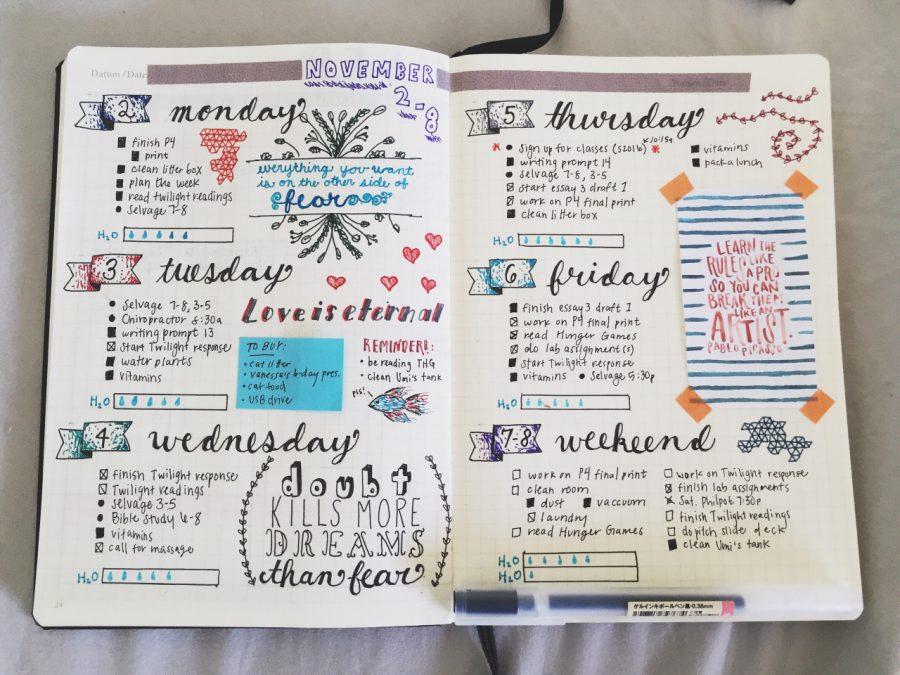
    Tip 2: Organize yourself. Get a journal, white board, Google Calendar, etc. to keep yourself organized with your assignments and know what you have to get done by the end of the week. Decorating it is a plus to make your tasks more enjoyable to do, but as long as you have a way of physically seeing what needs to get done, in what order it needs to get done, you're set! Another quick pro-tip is getting as much as you can done all at once because it feels sooo good to know your comments due Monday have already been completed by Friday. Trust me.
    Tip 3: Reward yourself after you get your assignments done so you have an incentive to do them. Knowing I get to watch a few episodes of a Netflix show or can go out to eat with my friends after I get my assignments in makes it so much easier to actually have motivation to do them, and is much needed for detailed assignments like these ones. If you have a friend in the class as well, encourage them to do their work and don't forget to reward yourselves!
Image result for organizational journal

Thursday, February 20, 2020

Assignment 12A- Figuring Out Buyer Behavior No.1

Assignment 12A- Figuring Out Buyer Behavior No. 1

Segment: Students of color attending or about to begin attending a university away from their hometown

Interview 1: My first interviewee is an 18-year old Hispanic female senior in high-school who is graduating this year and expecting to attend the University of Florida beginning Summer 2020. This person recognizes the identified need and is beginning to experience it for the first time as her friends have already begun their apartment hunting for the upcoming school year. She stated she has never needed to think about something like this, since she lives with her parents and has been for her whole life, and did not realize how many difficulties they would encounter when trying to decide a living situation. Therefore, getting her college acceptances has been the first time she has encountered this problem and is dealing with the situation on her own, for the most part. She also said her friends have gotten a head start and found subleases, and recognizes that she will be faced with the problem again when determining her living situation for the Fall/Spring 2020-2021 school year. She said using google to find apartment complexes in the general area she wants to live at and will hopefully be able to do in-person tours over the summer, as well as get personal recommendations from her friends who will live in other complexes over the summer too.

Interview 2: My second interviewee is a 20 year-old Asian/Hispanic first-generation female who currently attends the University of Miami. She stated she first experienced the issue well into attending the college she currently goes to, as incoming students attending that university are required to live on campus their first year and didn't even think about how difficult finding affordable off-campus housing would be- let alone close to campus. Traffic in Miami is terrible, and having a house or apartment complex within walking distance to campus would be certainly ideal for her situation. She also stated she comes from a lower-income household and can barely afford living in Miami as a broke college student, so worrying about paying rent is a very prominent issue in her life right now. Luckily after making friends her first year, she was able to find a group of people experiencing the same issue (all from different nationalities, since living in the city is expensive in general for most people) and decided to live with them farther from campus and carpool together most mornings. Regardless, days she needs to take the Metro are a hassle and require her to wake up extra early and is a big inconvenience.

Interview 3: My third interviewee is a 24 year-old Haitian female graduate student currently attending UF's College of Dentistry. She stated she began experiencing this need when she got accepted into graduate school, as she lived in a scholarship home that renewed her residency every year so long as she kept her grades up. After finishing her undergraduate courses, she realized she would need to look into housing options closer to the College of Dentistry so her commute wouldn't be so long now that she was full-time in the building. Thankfully, she does come from a family that isn't necessarily in a big financial need, but given her graduate status, definitely needs to think about finances to avoid being in bigger debt. Given the location of her building, she has more options in her housing, especially since on-campus housing isn't really an option for her. Finding a solution was not extremely difficult, since she was okay with the location of her apartment in regards to the College of Dentistry and thankfully has a lower than average rent price. After she finishes graduate schooling, she plans on securing a job outside of Gainesville and will not have to worry about her housing situation being close or not to campus.

Summary/Conclusion: While conducting these interviews, I came to realize that the need always exists, but the people who experience the need rotate and no longer have the need once they are not affiliated with the university anymore. There are definitely a wide assortment of students who experience this need, and even from my interviews I was informed of a greater population of people not only attending UF but other universities as well that experience this need. A living situation such as the one I proposed about a student-run housing complex would be ideal to implement in universities everywhere, and placement of such establishments in regard to the campus setup would be a factor to take into consideration as well. Depending on the background of the student, different people have access to different resources and gives them an advantage overs less fortunate students (international students, non english-native speakers, first generation, etc.) who dont have general knowledge on house hunting. Thus, a business concept like the one I proposed should be advertised to all incoming college students and even those already attending who may potentially continue in graduate school or employment at the university.

Assignment 11A- Idea Napkin No. 1

Assignment 11A- Idea Napkin No. 1

  1. You
    My name is Jeannette, and I am a second-year business administration major with an area of specialization in Travel & Tourism Management. I'm really involved with the international business programs and Hispanic Student Association, as well as a job at the UF Computing Help Desk. My involvements have allowed me to gain significant experience in hospitality and event planning, which is what I hope to have an occupation in in the future, and I feel it has allowed me to better understand a client's needs and how to solve that opportunity. Specifically, students that are first-generation and from communities of color, which is why I chose to focus on designing a student-run apartment complex close to campus that is affordable and has excellent living conditions. I know that a living situation, such as the one I'm proposing, would be of great interest to me and most of my friend groups, and can be something that can be implemented for the long run.
  2. What Are You Offering To Customers?
    I am offering a housing system close to the University of Florida's campus (and potentially other campuses across the nation) that allows students to pay discounted rent in exchange for weekly chores/roles of responsibility. This will ultimately result in lower rent costs as students wont need to pay for certain maintenance services, and could possibly even partner with apartment complexes nearby for access to their amenities at a reduced cost for students who would like to purchase it.
  3. Who Are You Offering It To?
    I am mainly offering my product to low-income, first-generation students enrolled in both undergraduate and graduate courses, as well as any student interested in living in off-campus housing. This housing establishment will mainly be marketed to students of color, but is open to any student experiencing financial constraints.
  4. Why Do They Care?
    I specifically wanted to highlight students who do not have the luxury of not taking rent price into account when searching for housing. I believe students should not feel they have to resort to on-campus or dirty off-campus housing just because of their family financial situation, and therefore should be able to experience decent living options walking distance to campus in case they also cannot afford transportation to class.
  5. What Are Your Core Competencies?
    I believe my whole idea in general is what sets me apart from other competitors. While I do understand there is much competition in the housing market, especially for the limited housing options available that are close to campus, none of them cater to the demographic group I am marketing this towards, and I have yet to see housing options that incorporate all of the elements I am proposing. Being a student in the position of my target group, I can understand on a personal level what students in different minority groups are looking for and how limited their housing options are due to different financial constraints. Furthermore, students living in this kind of housing can gain experience in many different skill sets, depending on their assigned chore for the week.
For the most part, I believe my elements fit together nicely to create a successful business concept that will aid thousands of students across the country. My only concern would be that some students would like to avoid having "chores" or responsibilities, and instead opt to live on campus or somewhere farther off-campus. However, with proper advertising and a thorough explanation of the benefits of this housing establishment, I think there would be a large community of students interested in my business concept and more than willing to provide a small service a week to have comfortable, affordable, and close living options to campus.

Wednesday, February 12, 2020

Assignment 9A- Testing the Hypothesis, Part 2

Assignment 9A- Testing the Hypothesis, Part 2

Who: Through my interviews, I learned that a group of people who didn't experience my stated opportunity, but should've, were students that had no problem resorting to living on-campus. While searching for off-campus housing was an option for them and they experienced what it was like for a short period of time, they didn't find they had as much frustration as they thought they would. Two of my interviewees stated they were offered to move in with a mutual friend of their's, however after experiencing their friend's frustration during the house hunting process, opted to stay and renew their application to live in on-campus housing again. Another interviewee explained that because they had extra rent money from a full-ride scholarship, they didn't feel limited to their options since money wasn't so much of an issue, so they only experienced a small extent of the issue. My fourth interviewee was very similar to my last one in that they were graduating seniors who didn't have to worry much about finding housing options anymore since so many people sublease for one semester  and there are many options/deals to choose from.

What: The need isn't to find a housing option that is either close to campus, affordable, or decent to live in, but rather a housing option for students that incorporates all of those elements together. I found that this problem didn't affect as wide of a variety of students as I anticipated, but still was prevalent to the students who did experience this opportunity. For students who have many options or are open to alternatives in their housing situation (for example students that don't mind on-campus housing), this doesn't appear to be as big of a problem.

Why: The group of students who fall inside the boundaries have a different underlying cause than those that fall outside of the boundaries. Many students that fell inside the boundaries are lower income or first-generation and international students that have to very carefully allocate their money to their different expenses. Those that fell outside of the boundary may have experienced similar struggles, but don't have the need for a solution since it doesn't technically affect them anymore.

Inside the Boundary                                     Outside the Boundary
Who:     Students currently apartment hunting                  Students living on campus/graduating

What:  Decent living options for students that are          More student housing close to campus
                   affordable and close to campus

Why: -Low-income students don't deserve bad housing just because they can't afford $900+ monthly rents or know how to properly apartment hunt if they're first-generation
-Students are desperate to find a place to live and landlords/apartment companies take advantage of the high demand and naive college students

Friday, February 7, 2020

Assignment 8A- Solving the Problem

Assignment 8A- Solving The Problem

Opportunity: There is no affordable student housing near campus that doesn't involve giving something up (upgraded/clean units, expensive rent, amenities, etc.) in exchange for location

Solution: I believe there should be more apartment complex companies entering the market for Gainesville student housing. Furthermore, I think it would be convenient to have student-run or recent graduate-run housing units in the UF campus area since students know and can relate to the struggles low-income college students face. Even hostel-style housing that can house students for at least a year would be more convenient than having to pay all the fees associated with renting an apartment or house near campus.

Assignment 7A- Testing the Hypothesis Part 1

Assignment 7A- Testing the Hypothesis

  1. My opportunity was identified back in exercise 5A. I strongly believe there should be more affordable, close to campus student housing, and especially for low-income and first generation students. Finding affordable, available housing somewhat close to the UF campus that is decent enough for students to live is nearly impossible due to one or two main companies dominating the housing market in the Gainesville area
  2. Who: low-income students attending college in Gainesville
    What: cannot find affordable housing near campus that is decent enough to live in
    Why: companies have a monopoly on the housing market in Gainesville
  3. Testing the Who: Students in the Gainesville area are not the only ones facing this problem. While Gainesville is one of the cities in Florida with the highest rent rates, I am aware this problem affects low-income students all over the state and even across the country. For out-of-state students already in debt, this can pose as a bigger problem since they have other, higher expenses to worry about
    Testing the What: There may be some hidden housing units that are currently being occupied by residents that are comfortable enough to live in and affordable. Furthermore, the rent of houses are far less than the rent in student apartment complexes. More run-down units are less expensive as well, but low-income students shouldn't be forced to resort to barely functioning units just because it's all that's available in the area. Housing very far from campus cost less as well, however it is inconvenient for students who cannot afford to have a car/scooter with them in college
    Testing the Why: Capitalism is the main culprit of the problem. Companies that run student housing like to prey off low-income and first-generation students because they dont know better, and are easier targets to profit off of. Landlords of the local houses do similar schemes, and also like to profit off of students by charging them crazy high rates, and utilities/parking/amenities on top of the rent price
  4. Interview 1: My first interviewee is one of my roommates, a theatre major in her 20's that is also a person of color and low-income, first-generation college student. Since we are not living in the same place next year, she has also found it difficult to search for affordable and decent housing near campus. While it has been frustrating for her, she recognized she is fortunate enough to have transportation (her own car) and therefore can settle for an affordable and furnished apartment complex about 20 minutes from campus. This is still frustrating for her because the bus rides are ~40 minutes long, but she is willing to make the sacrifice to live comfortably
    Interview 2: My second interviewee is a female senior living in a luxury-style apartment complex across the street from campus. While hunting for apartments in her freshman year, she informed me price wasn't an issue for her but rather the amenities offered and how comfortable she felt living in the apartment. Money hasn't been an issue for her in the past, and therefore wasn't an issue for her when finding her housing. She didn't care much about the monopoly in the housing market, and has been living in her current apartment since her freshman year
    Interview 3: My third interviewee is a 20 year old Argentinian male who is a first-generation college student in the U.S who lives with his family in Gainesville. He stated he is living at home because he cannot afford housing, and his problem is that since he lives at home and must commute to campus, parking is impossible to find. He believes finding good housing and parking go hand-in-hand, and for those who are searching for housing and must resort to far, off-campus housing should also have parking decals to commute to school.
    Interview 4: My fourth interviewee is a second-year first generation Mexican female living off campus in an apartment. She stated she just found the cheapest one (apartment) online, toured it, and liked it. Her apartment is an upgraded unit, and finds it inconvenient to commute to campus when her bus app isn't working, but takes the bus whenever she needs to get to campus anyways. Housing near campus is WAY too expensive and due to the circumstances, she is fairly comfortable with where she's at.
    Interview 5: My last interviewee is a male college freshman living on campus, non first-gen. He stated his parents had attended UF and had great recommendations for his living situation going into college. He hasn't experienced the struggle of searching for affordable housing yet, and he already knows what apartment complex he is living at next year. He said that many of his friends have experienced this frustration, and many of them live in housing owned by the same company. The rent rates HIGHLY differ depending on location, and he finds that his friends living close to campus have nicer, more upgraded units but it's a costly price.
  5. Summary:
    I learned that this opportunity does have a very specific target audience. It mainly affects low-income students who are of different ethnic backgrounds, mainly those students who are first-generation. While this may not be a huge problem for all students (such as those with dorms, cars, living with their parents, etc.), it does pose as a big frustration for students who are going into the house hunting process blind and with no knowledge of what proper student housing should look like. It is unfortunate that college students must give up either money or proper living conditions in order to comfortable live, and its an issue work trying to fix for the community that's affected.

Assignment 6A- Opportunities in Economic and Regulatory Trends

Assignment 6A- Opportunities in Economic and Regulatory Trends

1.      Economic Trend: Subway is laying off workers in attempt to streamline operations
Ø  B. I believe there is an opportunity that exists for Subway to recover from its most recent financial pinch, without having to lay off the number of workers they are currently letting go
Ø  C. Prototypical Customer: Subway managers who let go of employees in the 2,200 locations that closed within the past year
Ø  D. Easy or Difficult: The opportunity would be relatively difficult due to the scale of the problem and the time it would take to reemploy all those who were let off
Ø  Why did I see the opportunity: I found this as an opportunity because as someone who has family that has been affected by a company going through an economic dip, I have seen the way it has affected families firsthand and have thought of other solutions to the problem without needing to affect someone’s way of receiving income
2.      Economic Trend: Aviation is not the enemy in the climate battle
Ø  B. I believe there exists an opportunity to cut down on gas emissions and contributions to climate change without targeting only air travel
Ø  C. Prototypical Customer: Everyone is affected by the growing rate of gas and carbon emissions 
Ø  D. Easy or Difficult: It would be relatively easy given that the movement to be sustainable is pretty fresh and most people already try being sustainable
Ø  Why did I see the opportunity: As someone who likes to actively protect the environment and be sustainable (recycling, using reusable utensils, etc), I often try to find new ways to be green and encourage others to do the same, so when it comes to pollution, I am constantly thinking of ways our society can be more environmentally friendly 
3.      Regulatory Trend:
Ø  B. I believe there exists an opportunity to allow Uber to test self-driving cars without putting the pedestrians of major cities at risk of being hit and killed, as previously happened
Ø  C. Prototypical Customer: Pedestrians in California
Ø  D. Easy or Difficult: This would be relatively easy to implement as they could do their tests off-major roads or in designated routes that pedestrians dont take
Ø  Why did I see the opportunity: Technology, in my opinion, is advancing at a scary rate and I like to find ways to be sufficient on my own without the use of technology. Therefore, its important to find ways to not rely solely on technology and Uber should be something that is manually driven, not relied on by the technology of cars
4.      Regulatory Trend:
Ø  B. I believe there exists an opportunity to contain this virus better than the current situation. I think it's possible to make better efforts to quarantine communities and implement a worldwide hold on international travel
Ø  C. Prototypical Customer: Those worldwide affected by the coronavirus
Ø  D. Easy or Difficult: This would be relatively difficult to implement given the size and scale of the problem (worldwide)
Ø Why did I see the opportunity: I saw the opportunity because I have international family who have been affected by diseases in low-income communities and cannot access a hospital. By making better efforts to contain the virus, those who cannot afford to be seen by health professionals have a lesser chance of being affected